
Leads · Carpenters · Tradies
Is hipages Worth It for Carpenters? An Honest Look at the Cost
Executive Summary
The honest maths on hipages for a chippie
- You spend credits when you accept a lead (declining is free), and up to three carpenters in total can accept the same job, so you are quoting against at most two others
- The number that matters is cost per booked job, not cost per lead
- Carpenters cop a specific sting: a firm price on a deck or reno needs an on-site measure, so a lost job burns a wasted site visit plus the credits already spent accepting it
- On jobs over $20,000 the homeowner gets a 5 business day cooling-off period to sit on your quote next to up to two others
- The alternative: own your carpentry pipeline so the calls come straight to you
This is the carpenter-specific version. For the full tradie breakdown see is hipages worth it for tradies. To get found without paying per lead, see SEO for carpenters, or start with a free Google listing audit.
hipages is a paid lead-matching platform where a carpenter pays a monthly subscription that includes a credit allowance, then spends credits to accept a homeowner's job post, declining costs nothing 7. Up to three carpenters in total can accept and connect with the same customer, so you are quoting against at most two others 7. It can put work in front of you fast. The catch is that accepting a lead is not winning it, you share the job with whoever else accepted, and the moment you stop paying the work stops.
Before you decide, the quickest gut-check is a free Google listing audit to see how many of those deck and reno enquiries you could already be winning for nothing. hipages is a serious, established operator, not a scam. It is worth knowing, though, that the ACCC made hipages give a court-enforceable undertaking after it failed to properly disclose that subscriptions auto-renewed over 12 months and that cancelling early carried fees 1. Read the lock-in terms before you sign.
How hipages Works for a Carpenter
Two costs stack up:
- A monthly subscription, published in four tiers plus GST: Starter at $139 for 155 credits in 1 postcode, Advanced at $249 for 310 credits in 3 postcodes, Premium at $449 for 595 credits in 5 postcodes, and Platinum at $649 for 810 credits in 10 postcodes 6
- Credits, spent when you accept a lead, not when you merely respond to or view it. Declining a lead costs nothing. hipages does not publish a flat dollar price per lead: its matching engine sets the credit cost of each job by type, size, urgency and location, and that cost can change anytime until the job is marked hired, so it may move daily, weekly or monthly 8
When a homeowner posts "new deck in Penrith" or "pergola over the back patio", lead invitations go out to matching carpenters, and up to three carpenters in total can accept and connect with that customer 7. Accept and you spend credits, whether or not you go on to win the job. The difference for a chippie is that you cannot quote a deck properly off a two-line job post. You have to go and measure it.
The Real Cost Per Booked Carpentry Job
Cost per lead is the wrong number. The number that matters is what each job you actually win costs you.
Say you accept four leads to win one job. That is credits spent on the three you lost, plus the one you won, before your subscription. On a small $600 repair, that can be most of your margin gone. On a $14,000 deck, it is easy to wear.
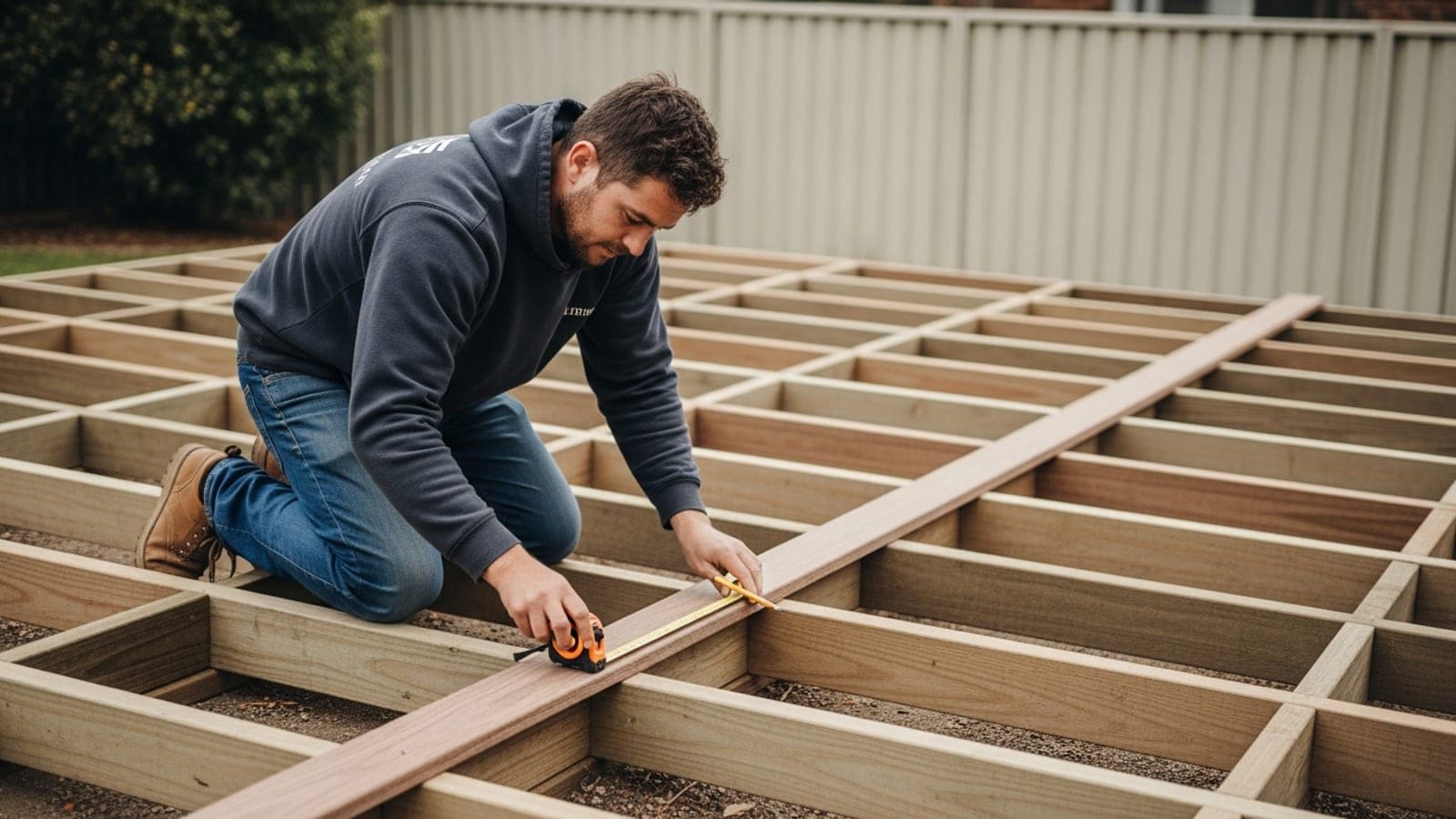
But here is the part that catches carpenters out. Unlike a plumber clearing a blocked drain over the phone, you cannot give a firm price on a deck, pergola or renovation without an on-site measure and scope visit. So accepting a lead does not just spend credits, it commits you to the fuel, the drive, and an hour or two on site working up a real quote. Win the job and that is fine. Lose it and you have spent the credits and burned the site visit, for nothing.
So the maths depends on your job mix:
- Small repairs and handyman-grade jobs (a few boards replaced, a gate, a bit of trim): the credits spent accepting the lead and the site visit eat the margin fast
- Bigger builds (decks, pergolas, carports, renovation carpentry, additions): a booked job can absorb the credits comfortably, if you actually win it
This is not a small or shrinking market. ABS figures put alterations and additions to homes at roughly $1.37 billion a month nationally, and that is exactly the framing, decking and addition work carpenters live on 5. The jobs are there. The question is whether you are spending credits to quote them against up to two others, or getting the call direct.
Action: Track your real numbers for a month. Credits spent accepting leads, site visits done, and jobs actually booked from them. Divide the cost by the wins. That is your true cost per job.
Why Shared Leads Hurt Carpenters More
A carpenter's job values sit right in the band where the rules get serious, and that changes the shared-lead sum.
In NSW you do not even need a licence for carpentry work under $5,000 in labour and materials, so on the small jobs you are competing on a platform against unlicensed handymen too. Once the work is over $5,000, you need a contractor licence from NSW Fair Trading, and unlicensed work over that line risks fines up to $22,000 for an individual 2. Most real carpentry, a deck, a pergola, reno framing, sails straight past $5,000.
The bigger issue is the $20,000 line. Once a residential building job goes over $20,000 in NSW, the homeowner must get a full written contract, and they get a mandatory 5 business day cooling-off period, a deposit capped at 10%, and a progress-payment schedule tied to completed stages 3. Deck, addition and renovation jobs routinely cross that line.
Put those two facts together and you can see the trap. You accept the lead and spend the credits, you drive out and measure a $25,000 deck-and-pergola job, and you work up a proper quote. Then the homeowner has five business days to sit on your price, next to up to two other hipages quotes for the same job, before they commit to anyone. A plumber quotes and closes a blocked drain in one phone call. You are carrying a wasted site visit, spent credits, and a cooling-off clock, every time a shared lead goes cold.
Action: On any platform lead, qualify hard before you drive out. Ask the budget, the timeframe, and whether they are getting other quotes. If it smells like a three-quote price-shop on a big job, it is the most expensive kind of lead to lose.
When hipages Makes Sense for a Carpenter
It is not all bad. hipages can be a reasonable tool when:
- You have just gone out on your own and have no Google presence yet
- You hit a quiet patch and need to fill the diary this week
- You are breaking into a new suburb where nobody knows you
- You chase the bigger builds, decks, pergolas, carports, renovation carpentry, and skip the sub-$5,000 repairs that race to the bottom against handymen
Used like that, as a tap you turn on when you need work and off when you are busy, it has a place.
When hipages Stops Paying
It stops being worth it when:
- You are paying for leads you could be getting for free off your own Google listing
- You are stuck quoting big jobs against up to two other carpenters, then losing them in the cooling-off week
- The fees are a fixed monthly cost whether the leads convert or not
- You have built no asset of your own, so if you stop paying, you are back to nothing
That last point is the big one. Every dollar into hipages rents you a lead. The same effort into your own Google presence builds an asset you own.
The Alternative: Own Your Carpentry Pipeline
When someone searches "deck builder near me" or "pergola builder Gosford", you want to be the chippie who shows up on the map and gets the call directly, with no lead fee and nobody else sharing it.
You are already sitting on the trust signals that win those jobs. As a licensed carpenter you hold a real credential a homeowner can check, and your past decks and pergolas are the best sales tool you own. That matters, because reviews and proof are how people choose a tradie now, and the pattern is not unique to Australia: a large US consumer survey found 97% of consumers read reviews when choosing a local business, and 41% always read them 4. None of that works for you while it is buried inside a platform. On your own listing and website, your licence number, your reviews and your job photos do the selling.
That comes from three things working together: a complete Google Business Profile, a steady flow of reviews, and a website with a page for each job you do, from decks and pergolas to renovation carpentry. It takes longer to build than turning on hipages, but the calls come straight to you and you stop paying per lead.
Most smart carpenters run light hipages early, then lean on their own Google presence as it grows, and turn the platform down.
Action: Build the pipeline you own. Full plan: SEO for carpenters. Want it built for you? See how we build carpenter websites, or book a call.
Want to Know What You Should Show Up For?
The quickest way to know if you even need to pay for leads is to see where you already rank.
- Free website audit: if you have a site, we check whether it is built to turn searches into calls.
- Free Google listing audit: we check whether you appear in the map for deck, pergola and carpentry searches in your suburbs, and what is costing you the free calls. PDF in 24 hours.
What a carpenter website costs
- Core Multi-Page$1,999
core site, About, Reviews, Contact + a page per service
- Max Multi-Page$2,999
everything in Core + 10 local suburb pages
- Pro Multi-Page$6,498
everything in Max + 10 more suburb pages, GBP optimisation and 30 directory listings
Maintenance: from $99/month after your build.
A 20-minute call and a plan for more leads. No sales pitch.
We build chippie sites that turn Google searches into calls, so you are not renting every enquiry forever. Book a call if you want hipages for volume and a site that keeps paying back when the subscription stops.
Frequently Asked Questions
Is hipages worth it for carpenters?
It depends on your job mix. For bigger builds like decks, pergolas and renovation carpentry, a booked job can absorb the credits it costs to accept the lead. For small repairs, the credits spent accepting leads and the site visit often eat the margin, especially since up to three carpenters in total can accept the same job, so you are quoting against at most two others. Carpenters also carry a specific risk: you have to measure a job on site before you can quote it, so a lost lead burns a wasted visit on top of the credits already spent accepting it. Work out your real cost per booked job before deciding.
How much does hipages cost a carpenter?
A monthly subscription that includes a credit allowance, published in four tiers from $139 to $649 plus GST a month. Credits are spent whenever you accept a lead, not when you decline it or merely view it, and declining costs nothing. hipages does not publish a fixed dollar price per lead: the credit cost is set dynamically by its matching engine and can change daily, weekly or monthly. The cost that matters is per booked job: the credits spent across every lead you accept to win one, plus the site-visit time you spend quoting the ones you lose.
Do other carpenters get the same hipages lead as me?
Often, yes. hipages caps it at three carpenters in total who can accept and connect with the same customer, so at most you are quoting against two others who also spent credits accepting the job. On bigger jobs over $20,000 the homeowner also gets a 5 business day cooling-off period, so they can sit on your quote next to the others before choosing anyone.
Do I need a licence to take carpentry jobs off hipages?
In NSW you need a contractor licence for carpentry work valued over $5,000 in labour and materials, and unlicensed work over that line risks fines up to $22,000 for an individual. Under $5,000 no licence is required, which is why you end up competing against unlicensed handymen on the small jobs. Check your own state's rules, as thresholds vary.
Is SEO better than hipages for a carpenter?
They do different jobs. hipages gives instant but paid, shared leads. SEO takes longer but the calls come straight to you, with no lead fee, and your listing and website are assets you own. Your licence, your reviews and your deck and pergola photos also do far more selling on your own site than they ever can inside a platform. Many carpenters use light hipages early, then rely on their own Google presence as it builds.
Should a new carpenter use hipages?
It can be a reasonable way to fill the diary when you have no Google presence yet, as long as you chase the bigger builds and treat it as a tap you turn off once your own pipeline is working. Qualify each lead hard before you drive out to measure, and start building your Google listing and website in parallel from day one.
How do I stop relying on hipages?
Build your own pipeline: complete your Google Business Profile, get reviews after every job, and put up a website with a page for each carpentry service and the suburbs you cover. As your own calls grow, turn the platform down. See SEO for carpenters.
References:
- [1] ACCC, Tradie platform hipages rectifies subscription trap issues
- [2] NSW Government (NSW Fair Trading), carpentry work licence requirements and the $5,000 threshold
- [3] NSW Government, residential building contracts, cooling-off period and deposit rules
- [4] BrightLocal, Local Consumer Review Survey 2026 (1,002 US consumers), how people read and use reviews
- [5] ABS, Building Approvals, Australia, alterations and additions to residential buildings
- [6] hipages, Membership costs (subscription plans and monthly credit allowances)
- [7] hipages, FAQs: How do I use my credits? (tradies accept or decline; up to three tradies can accept and connect with a customer)
- [8] hipages, FAQs: How does hipages decide how many credits for a job lead? (credits are used to accept job leads; the credit cost of a lead can change with demand, daily, weekly or monthly)
This is the carpenter-specific version. For the full tradie breakdown, see is hipages worth it for tradies.
Published by Made 4 Tradies. Built by online experts who understand tradies. Serving Sydney, the Central Coast, Newcastle, and the Hunter.
Talk To A Real Person
Want us to look at your site and tell you straight?
Book a quick call and we'll tell you what's working, what's costing you calls, and what to fix first. No pitch, no obligation.
A straight read on your website from people who build them for tradies every day.
Book a quick call →Prefer it in writing? Free website audit →