
Leads · Test & Tag Technicians · Tradies
Is hipages Worth It for Test and Tag Technicians? (2026 Honest Review)
Executive Summary
The honest maths on hipages for a test and tag business
- You pay a monthly subscription that bundles credits, and spend credits when you accept a job, not when you respond, and each job is usually shared with several other operators at the same time
- hipages is a consumer home improvement marketplace, but your real buyer is a business with a legal compliance duty, not a homeowner posting a one-off repair
- Test and tag is priced per item (roughly $2 to $6 each), so the credits you spend accepting a lead are a much heavier tax on margin than they are on a plumber's callout or an electrician's install
- The profit in this trade is the recurring re-test contract, which is a relationship you build, not a one-off lead you rent
- The alternative: own your test and tag pipeline so the compliance work comes straight to you, with no lead fee and nobody else quoting the same job
This is the test and tag version. For the full tradie breakdown see is hipages worth it for tradies. For every test and tag guide in one place, see the test and tag marketing hub.
hipages is a lead platform where a test and tag operator pays a monthly subscription that bundles a set of credits, then spends credits when they accept a job a customer posts, whether or not they win it. That same job is usually sent to several other operators at once. It can put work in front of you fast. The catch is that you spend credits on every lead you accept, you share each one with competitors, and the moment you stop paying the work stops. Before you pay for a single lead, the fastest sanity check is to see what you already rank for: our free Google listing audit shows whether the businesses that need this work can already find you without a cent in lead fees.
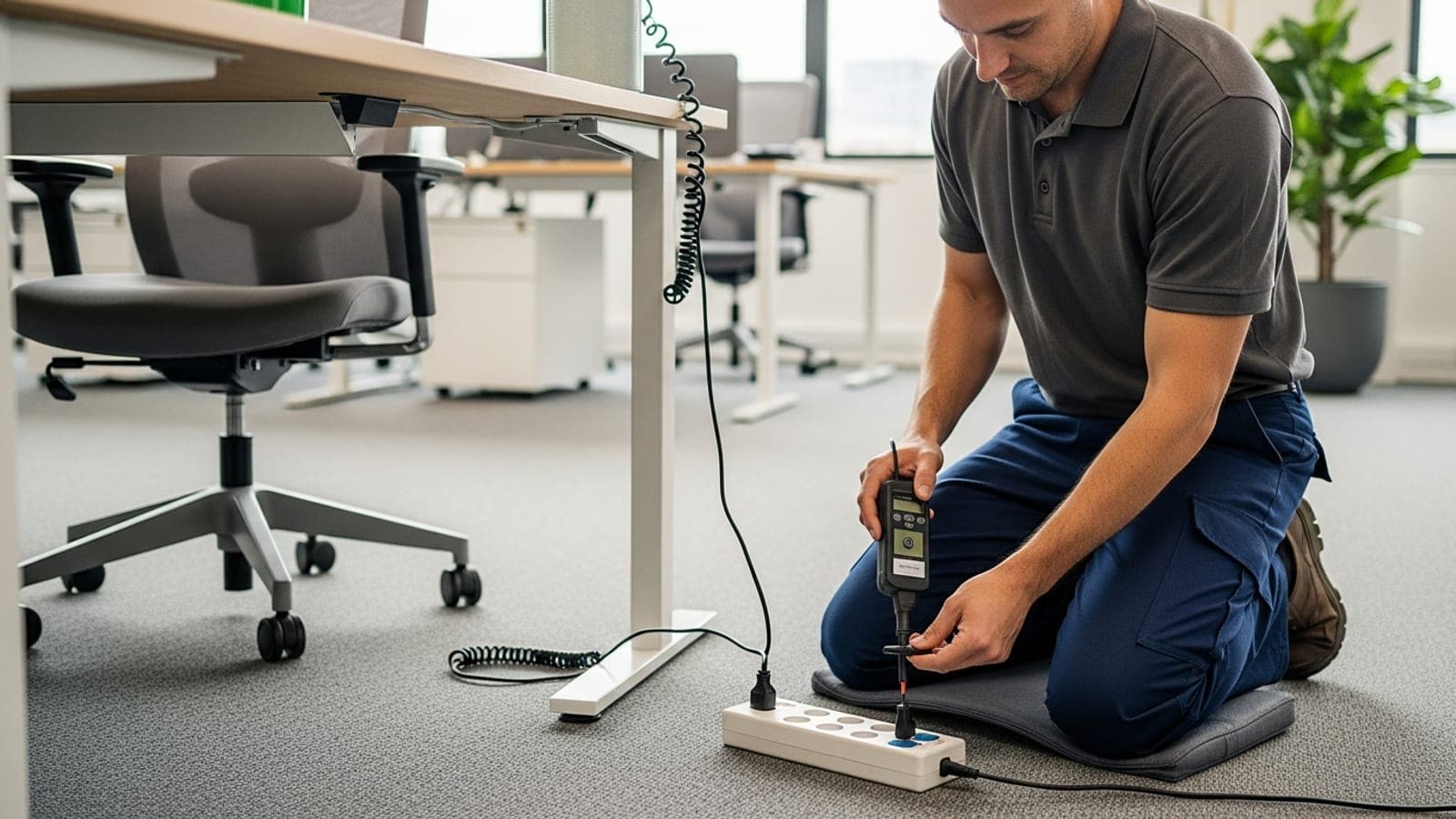
Test and tag is an unusual fit for this kind of platform, and the reason is who actually buys the work. Test and tag is the process of visually inspecting and electrically testing plug-in appliances and power tools against the Australian and New Zealand Standard AS/NZS 3760, then tagging each item with the test date and next-due date so a workplace can prove its electrical equipment is safe to use. The person who needs that is not a homeowner scrolling a marketplace for a one-off repair, it is a business with a recurring compliance obligation. Here is how to work out whether hipages is worth it for your business.
A few numbers worth knowing before you commit:
Typical Australian test and tag pricing runs about $2 to $6 per item, with one national operator quoting $2.00 to $3.80 ex GST per item. That is the real ceiling a per-lead platform fee has to be measured against, and it is a fraction of a plumber's callout or an electrician's install 5.
hipages describes itself as the place to connect homeowners with tradies to simplify home improvement: a consumer renovation and repair marketplace, not a workplace-compliance channel 1.
Your real buyer is not a homeowner. A PCBU, a business or employer, has a legal work health and safety duty to have plug-in electrical equipment regularly inspected, tested and tagged by a competent person, with AS/NZS 3760 setting the method and frequency 4.
There is no single national test and tag licence. Under AS/NZS 3760:2022 anyone can test and tag once they are a competent person through training, experience or a qualification, which puts the trade outside the licensed-trade credibility model hipages is built around, except in Queensland, where testing equipment belonging to another business requires a restricted electrical contractor licence from the Electrical Safety Office, and Western Australia, where a nationally recognised RTO course is required 3 9 10.
hipages runs on a subscription: the ACCC documented historical plans from $25 to the live price a month for an initial six to 12 month subscription term, across more than 34,000 subscribers 2. Today's published plans range from $139 to $649 a month plus GST, each bundling a monthly allowance of credits that you spend when you accept a job, not when you merely respond 6.
How Does hipages Work for a Test and Tag Business?
Two costs stack up:
- A monthly subscription plan, from $139 to $649 a month plus GST depending on postcodes and plan tier, each including a monthly credit allowance 6
- Credits, spent when you accept a job, not when you merely respond. Declining a job is free, and hipages sets the credit cost of a job dynamically, so it can move daily, weekly or monthly depending on demand 8
When a customer posts a job in your area, the platform sends lead invitations to matching operators, and up to three operators in total can accept and connect with that customer 7. If you accept, you are quoting against at most two other operators who also spent credits, and only one of you wins it. On a marketplace built around one-off consumer jobs, that competition tends to come down to the cheapest tag, which is the last thing a compliance-driven trade wants to compete on.
One thing is worth checking before you sign. The ACCC secured a court-enforceable undertaking from hipages, given on 30 May 2023, after it failed to clearly disclose that tradie subscriptions auto-renewed every 12 months with early-termination fees, and in some cases wrongly told subscribers they could not cancel. Read the contract term, the notice period and the cancellation terms before you commit 2.
Action: Before you subscribe, ask hipages what lead volume and per-lead pricing look like for workplace testing in your exact area, and whether the demand there is coming from businesses or homeowners. That one answer tells you most of what you need to know.
Why Is hipages a Poor Fit for Test and Tag?
Most trades on a lead marketplace live on emergency or renovation callouts, where the platform can genuinely create demand a homeowner would otherwise take to Google. Test and tag is different, and three things make the same shared lead a worse deal.
hipages sells home improvement, but nobody renovates their way to a tagged power board. hipages describes itself as the place to simplify home improvement for consumers 1. Test and tag is not home improvement. It is a work health and safety obligation a business carries: a PCBU must have its plug-in equipment inspected, tested and tagged by a competent person to AS/NZS 3760 4. hipages supports over 250 trade and home improvement categories, and test and tag is not one of them, so an operator lists under Electrician alongside every sparky doing switchboards and lighting 6 13. The office manager, site supervisor, facilities manager or property manager who needs you is not the audience a consumer renovation marketplace is built to reach, so the leads that do come through skew towards the rare one-off, not the recurring work that pays.
The job value is per item, so credits spent accepting a lead bite hard. Test and tag is priced by the item, roughly $2 to $6 each 5. A small office of 50 items lands in the low hundreds of dollars, roughly $100 to $300 at that rate. Spend credits accepting that lead and you are handing over a real slice of margin before you have picked up a tester. The bigger the job, a full commercial fit-out or a multi-site contract, the more that credit spend can be absorbed. The everyday small jobs that fill a test and tag diary are exactly the ones a per-lead credit model punishes.
There is no licence for the platform to verify, and the profit is in contracts it cannot sell. hipages leans on verified, licensed tradespeople as its trust signal. Test and tag has no national licence: under AS/NZS 3760:2022 a competent person qualifies through training, experience or a qualification, with only Queensland and Western Australia adding their own requirements 3 9 10. So the credibility model that helps a licensed plumber does less for you. And the real money in this trade is the recurring re-test schedule. Testing intervals under the model work health and safety code run from three-monthly for hire equipment up to twelve-monthly for most higher-risk settings 11, while Queensland's own regulation allows office-only equipment as little as every five years, and for service or office work treats a connected safety switch as an alternative to periodic testing altogether 12, so the exact schedule depends on where and how the gear is used, and on what protection is already installed. Either way it is a relationship you build, not a one-off lead you rent.
What Does a Booked Test and Tag Job Actually Cost You?
Cost per lead is the wrong number. The number that matters is what each job you actually win costs you.
Because hipages does not publish a flat price per lead, think in credits, not dollars. Say you accept four leads in a month and win one job: three of those credit-spends bought nothing, so a real share of your monthly credit allowance is being carried by the one job you actually booked. On a $200 small-office tag-and-test job, that is most of your margin gone. On a large fit-out or a recurring multi-site contract, it is far easier to wear.
So the maths depends on your job mix:
- Everyday small jobs (a single office, a cafe, a handful of power tools): credits spent accepting leads eat the margin fast, because the whole job might be worth what several accepted leads cost in credits
- Large or recurring work (commercial fit-outs, construction sites, multi-site contracts): a booked job can absorb the lead cost, but this is rarely the work a one-off consumer marketplace sends you
Action: Track your real numbers for a month. Add up the lead fees and subscription you paid, count the jobs you actually booked from them, and divide. That is your true cost per job, and on a per-item trade it is usually higher than it looks.
When Does hipages Make Sense for a Test and Tag Business?
Rarely, and only at the edges. It can occasionally be worth a look when a genuinely one-off job happens to be posted by a homeowner or landlord (an Airbnb host tagging appliances, a rental handover), or when you have just started, have no Google presence yet, and want to fill a gap while you build one.
Be honest that this is not the trade's bread and butter. Test and tag makes its money on recurring compliance schedules, and a one-off lead marketplace is not built to deliver those. If you do use it, treat it as a tap you turn off the moment your own enquiries start.
When Does hipages Stop Paying?
It stops being worth it when:
- You are paying for leads you could be getting for free off your own Google listing
- You are stuck competing on the cheapest tag for one-off jobs, when your profit is in recurring contracts
- The subscription is a fixed monthly cost grinding away whether the leads convert or not
- You have built no asset of your own, so if you stop paying, you are back to nothing
That last point is the big one. Every dollar into hipages rents you a lead. The same effort into your own Google presence builds an asset you own, and in a trade where one recurring contract can be worth more than a year of one-off tags, that asset is where the real money is.
The Alternative: Own Your Test and Tag Pipeline
When an office manager searches "test and tag near me", "office test and tag Penrith" or "workplace compliance testing Gosford", you want to be the operator who shows up on the map and gets the enquiry directly, with no lead fee and nobody else quoting the same job.
For test and tag, the channel mix that actually works is four things, and none of them is a paid lead marketplace:
- A complete Google Business Profile, so you appear in the map results for compliance searches in your area
- A steady flow of reviews, the exact thing an office or facilities manager checks before they hand you a recurring contract
- A website with a page for each service and industry you cover (portable appliance testing, RCD testing, offices, construction, hospitality, healthcare), with your AS/NZS 3760 credentials and insurance up front
- Direct outreach to the people who actually buy the work: facilities managers, property managers and site supervisors who own a recurring re-test obligation, not a homeowner scrolling a marketplace
That last one is the difference between this trade and most others. The profitable core of test and tag is the quarterly or annual contract, and those come from being findable, credible and in front of the right business, not from renting a one-off lead. The full playbook is in our SEO guide for test and tag businesses, so this post links to it rather than repeating it.
Action: Build the pipeline you own. Full plan: SEO for test and tag. Want it built for you? See websites and marketing for test and tag businesses, or book a call and we will map it out with you.
Want to Know What You Should Show Up For?
We are the alternative to renting leads: instead of paying per shared quote on a one-off job, you own the enquiries. The quickest way to see the gap is to check where you already rank.
- Free website audit: if you already have a site, we check whether it is built to turn a compliance search into a booked contract.
- Free Google listing audit: we check whether you appear in the map for test and tag searches in your suburbs, and what is costing you the free enquiries. PDF in 24 hours.
No call required. No pitch. Just a straight read on what renting leads is costing you.
What a test and tag website costs
- Core Multi-Page$1,999
core site, About, Reviews, Contact + a page per service
- Max Multi-Page$2,999
everything in Core + 10 local suburb pages
- Pro Multi-Page$6,498
everything in Max + 10 more suburb pages, GBP optimisation and 30 directory listings
Maintenance: from $99/month after your build.
A 20-minute call and a plan for more leads. No sales pitch.
Frequently Asked Questions
Is hipages worth it for test and tag technicians?
For most test and tag businesses, no, or only at the margins. hipages is a consumer home improvement marketplace, but your real buyer is a business with a legal compliance duty, not a homeowner. Because the work is priced per item (roughly $2 to $6), the credits you spend accepting a lead are a heavy tax on the everyday small jobs that fill a diary, and the recurring contracts that make the trade profitable are not what a one-off lead platform delivers. Work out your real cost per booked job before deciding.
How much does hipages cost a test and tag business?
hipages plans run from $139 to $649 a month plus GST, each including a monthly allowance of credits. The ACCC separately found historical hipages subscription plans ranging from $25 to the live price a month across the platform's tradie base. You spend credits to accept a job, not to respond to it, and hipages does not publish one flat price per lead: the credit cost depends on the job and demand, and can change daily, weekly or monthly. The number that matters is per booked job: your credit spend plus subscription, divided by the jobs you actually won.
Why is hipages a poor fit for test and tag?
Because the platform and the trade are built for different buyers. hipages markets itself to consumers doing home improvement, while test and tag is a work health and safety obligation carried by a business under AS/NZS 3760. The job is priced per item, so a small office job of a few hundred dollars cannot comfortably carry the credits spent accepting a lead, and the profitable recurring re-test contracts come from a relationship, not a one-off shared lead.
Do you need a licence to do test and tag in Australia?
There is no single national test and tag licence. Under AS/NZS 3760:2022 you can test and tag once you are a competent person through training, experience or a qualification, so an electrical licence is not required nationally. Queensland requires a Restricted Electrical Contractor's Licence to offer it commercially, and Western Australia requires a nationally recognised RTO course. This absence of a universal licence is part of why hipages' verified-tradesperson trust model fits licensed trades better than it fits test and tag.
Who actually books test and tag work?
Businesses, not homeowners. The buyer is typically an office manager, site supervisor, facilities manager, property manager or business owner acting on a work health and safety duty to keep plug-in equipment tested and tagged. The work is overwhelmingly B2B and compliance-driven: offices, construction sites, retail and hospitality, healthcare, schools and commercial property handovers, on a recurring schedule.
Is SEO better than hipages for test and tag?
They do different jobs. hipages gives instant but paid, shared leads, usually for one-off jobs. SEO takes longer to build, but the enquiries come straight to you, you pay nothing per lead, and they are far more likely to become the recurring compliance contracts that make test and tag profitable. Most smart operators use light hipages early if at all, then lean on their own Google presence as it grows.
How do I win recurring test and tag contracts without hipages?
Build the pipeline you own: a complete Google Business Profile, reviews after every job, a website with a page for each service and industry you cover with your AS/NZS 3760 credentials on show, and direct outreach to the facilities and property managers who carry a recurring re-test obligation. That mix wins the contracts a one-off lead marketplace never will. The full walkthrough is in SEO for test and tag.
References:
- [1] hipages Group, company site (positions the platform as the place to connect consumers with tradies to simplify home improvement)
- [2] ACCC, Tradie platform hipages rectifies subscription trap issues (more than 34,000 subscribers paying $25 to the live price/month for an initial six to 12 month subscription term; auto-renewal and cancellation undertaking, 30 May 2023)
- [3] Test and Tag Training, AS/NZS 3760 (a competent person qualifies via training, experience or qualification; no national electrical licence required, with Queensland and Western Australia exceptions)
- [4] SafeWork NSW, Electrical inspection and testing (a PCBU's WHS duty to have plug-in equipment inspected, tested and tagged by a competent person to AS/NZS 3760)
- [5] The Local Guys Test and Tag, Test and tag price list (typical per-item pricing of about $2 to $6, with one operator quoting $2.00 to $3.80 ex GST per item)
- [6] hipages, Membership costs (published subscription plans: $139 to $649 a month plus GST, each with a monthly credit allowance and a 6-month introductory term)
- [7] hipages, FAQs: How do I use my credits? (tradies can accept or decline a lead invitation; up to three tradies can accept and connect with a customer on the same job)
- [8] hipages, FAQs: How does hipages decide how many credits for a job lead? (credits are spent to accept a job lead, not to respond or decline; hipages sets the credit cost of a lead dynamically, and it can change daily, weekly or monthly)
- [9] Business Queensland, Electrical equipment and tool testing and tagging (only a competent person, with experience, qualifications and training, may test and tag; a separate electrical work licence is required to repair equipment)
- [10] WorkSafe WA, Competency based training in testing and tagging (a competent person without an electrical qualification must complete a nationally accredited course run by a registered training organisation before testing and tagging)
- [11] Safe Work Australia, Managing electrical risks in the workplace, Code of Practice (hire equipment tested at least every 3 months; manufacturing, workshop and commercial cleaning equipment at least every 6 months; higher-risk equipment generally at least every 12 months)
- [12] Queensland Government, Electrical Safety Regulation 2026 (Qld), ss 133 and 138 (specified equipment used only for office work must be inspected and tested at least once every 5 years; other service and office equipment at least once every year; non-double-insulated manufacturing equipment at least every 6 months. Under s 138 a connected safety switch is an alternative to that testing for service or office work equipment, while s 133 requires manufacturing equipment to be both tested and connected to a safety switch)
- [13] hipages, Trades directory (full list of hipages trade categories; no dedicated test and tag category, with test and tag operators listing under Electrician)
This is the test and tag guide. For the full version covering every trade, see is hipages worth it for tradies.
Published by Made 4 Tradies. Built by online experts who understand tradies. Serving Sydney, the Central Coast, Newcastle, and the Hunter.
Talk To A Real Person
Want us to look at your site and tell you straight?
Book a quick call and we'll tell you what's working, what's costing you calls, and what to fix first. No pitch, no obligation.
A straight read on your website from people who build them for tradies every day.
Book a quick call →Prefer it in writing? Free website audit →