
Tradies · Insurance · Business
What Insurance Does a Tradie Actually Need? (2026 Checklist)
Executive Summary
Key takeaways, what you'll get from this guide
- Which cover is genuinely compulsory (workers comp, once you hire), which is demanded by every client (public liability), and which is optional but smart
- Real September 2025 public liability sample premiums for carpenters, sparkies and plumbers, from under $500 a year to a few thousand
- Why a sole trader with no staff has zero cover for their own injury, and what fills that gap
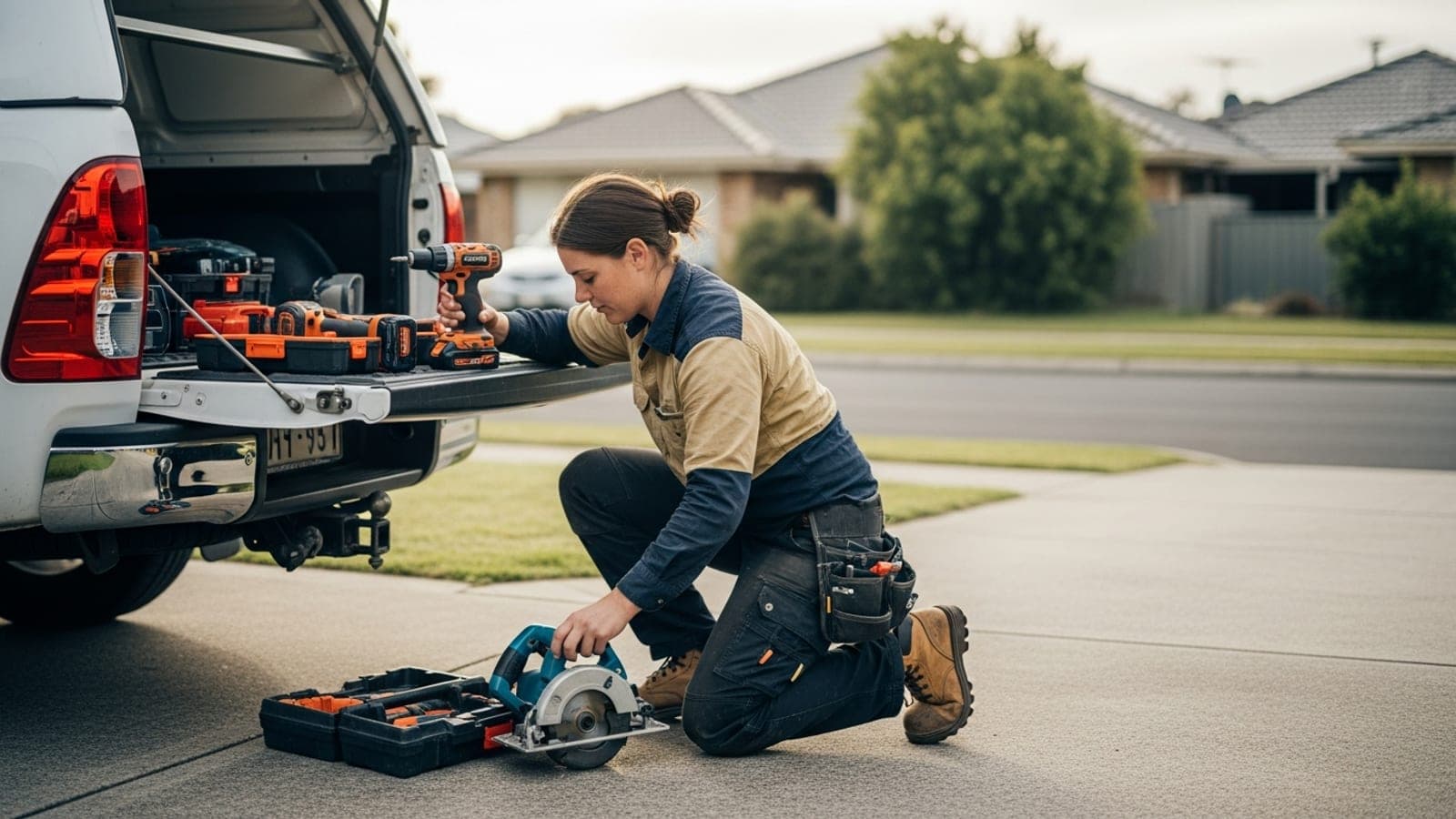
- What actually happens to a stolen ute-load of tools, and why "my car insurance covers it" usually does not
- How to buy the right amount of cover without over-insuring or leaving a hole
We do not sell insurance and earn nothing if you buy a policy: we build websites for Australian tradies, and we are happy to run a free Google listing audit on your online setup with no pitch attached. So this guide is written straight: what you have to have, what you should have, and what you can skip, with the real numbers where we could verify them.
Tradie insurance is the group of business policies, public liability, tools and equipment cover, income protection, and workers compensation once you employ anyone, that protects an Australian tradie against the cost of an accident on site, a stolen ute-load of tools, or a client's claim against your work.
Quick heads up. This is general information, not financial, insurance, or legal advice. Cover, prices and rules differ by trade, by insurer and by state, and they change. Confirm the detail with a licensed broker or the official source linked for each point before you buy.
A few numbers worth knowing before you read on:
Workers compensation is compulsory for employers, but it is run state by state, so the trigger and the thresholds are set by your state scheme, not by one national law. In NSW, employers must hold a workers compensation policy to help cover work-related injuries and illnesses 1. You are exempt only if you meet all three tests: you pay $7,500 or less in wages in a financial year, you do not hire an apprentice or trainee, and you are not part of a group of businesses 6.
Tool theft is not a rare event. Citing Crime Statistics Agency data, RACV reported that over $33 million worth of hand and power tools were stolen from Victorian tradies in 2023, a 37% jump on the year before 2.
If you cannot work, income protection typically replaces 75% or 90% of your pre-tax income, based on your earnings in the 12 months before the illness or injury 3.
Is Public Liability Insurance Compulsory for Tradies?
No law says "every tradie must hold public liability", and for most trades it is not a condition of holding your contractor licence either. What makes it unavoidable is your contracts: every commercial client, builder and principal contractor will want a certificate of currency before you set foot on their site, and no certificate means no start date. Public liability covers you if your work injures someone or damages their property: you flood a kitchen, drop a tool off a roof, or a client trips over your gear.
Two things do get mandated in law, and they are not this. Specific licence classes carry their own insurance conditions (professional indemnity, covered further down), and residential building work over a dollar threshold has its own compulsory home warranty scheme in each state.
Standard policies run from $5 million to $20 million, with $5 million the most popular level among tradies because it is the cheapest 4. What you pay depends on your trade's risk, your turnover and the cover limit you pick. Trade Risk's September 2025 sample quotes give a realistic spread 4:
| Trade (sample) | Annual revenue | Cover | Sample yearly premium |
|---|---|---|---|
| Carpenter | $120,000 | $5 million | $474 |
| Electrician (QLD) | $200,000 | $5 million | $507 |
| Plumber | $100,000 | $20 million | $779 |
| Plumber (VIC) | $250,000 | $5 million | $2,247 |
At the bottom end, a sole trader on minimum cover can pay under $500 a year. At the top, a large or high-risk operator can pay $100,000 or more 4. Same product, very different price, so the trade you are in and the cover limit your clients insist on matter more than the brand of insurer.
Action: Ask the builders and commercial clients you want to work for what cover limit they require ($10 million and $20 million are both common), then quote to that number, not the cheapest one.
Do I Need Workers Compensation as a Sole Trader?
This is the one that is actually the law, though the trigger is not quite "the day you hire someone", and it is set by your state scheme rather than nationally. In NSW you must hold a policy unless you clear all three exemption tests: $7,500 or less in wages for the financial year, no apprentice or trainee, and not part of a group of businesses 6. The apprentice test is the one that catches tradies out. Put on one apprentice and you need a policy no matter how small the wage bill, and even an exempt employer still has to act when someone is hurt working for them 6. Check your own state scheme, because the wage threshold is not the same everywhere.
Here is the catch that catches out sole traders. Workers comp covers your workers, not you. If you are a one-person business with no staff, you are not an employee of anyone, so a workers comp policy will not pay a cent if you hurt yourself. You break an ankle falling off a ladder, and the very insurance most people assume covers "tradies getting hurt" does nothing for you.
That gap is real income lost with no sick pay behind it, and it is exactly why the next two sections matter more for a sole trader than the flashy liability numbers.
Action: If you have any staff at all, confirm your workers comp policy is current with your state scheme. If you are a solo operator, accept that you carry your own injury risk, and read the income protection section below.
Should I Insure My Tools?
Your tools are your business, and they are a target. Across Victoria alone in 2023, thieves took 18,626 power tools and 14,911 hand tools, part of that $33 million haul. The number of items stolen was up 12% on the year before, while the value of the haul jumped 37% 2. A stolen ute-load is not just the replacement cost, it is the jobs you cannot start on Monday.
The trap is assuming you are already covered. You usually are not:
- Motor insurance covers the ute, not the tools in the tray. Standard home or vehicle insurance usually excludes commercial-use tools, especially when they are stored offsite or in transit 7.
- Home and contents is written for personal items at your home address and typically excludes items used for business 7. Where a contents policy does throw in some tools-of-trade cover, it is capped low: Suncorp, for example, covers tools or equipment used for any business activity up to $1,000, $2,000 or $5,000 in total depending on which tier you hold 8. That is a hand tool or two, not a kit.
- That leaves a dedicated tools and equipment policy (sometimes called portable equipment or general property cover) as the thing that actually pays out.
Read the theft wording before you rely on it. Cover for tools taken from a vehicle generally depends on proof of forced entry, a broken lock, a smashed window or a prised-open toolbox, and theft from an unsecured location such as an unlocked van is a standard exclusion 7. Leave the canopy unlocked and the claim goes nowhere, which matters because a lot of theft happens from a ute parked at home overnight.
Action: Add up the replacement cost of your full kit, honestly, then insure to that figure. Under-insure and you get a partial payout when the whole lot walks.
What Is Income Protection and Do I Actually Need It?
For a self-employed tradie, this is often the most important cover you do not have. Income protection pays you a monthly benefit if illness or injury stops you working, and it typically replaces 75% or 90% of your pre-tax income, worked out on your earnings in the 12 months before you got hurt 3.
Why it matters more for a tradie than for an office worker: you have no sick leave, no annual leave, and (if you are a sole trader) no workers comp for your own injury. A cracked wrist for a bricklayer is not a paperwork inconvenience, it is months with no money coming in while the bills keep arriving. Your trade is physical, so a run-of-the-mill injury takes your whole income offline in a way it would not for someone at a desk.
Two things worth knowing. You choose a waiting period (how long before payments start, typically anywhere from 14 days to two years) and a benefit period (how long they last, commonly two or five years, or up to a set age such as 65), and both move the price 3. And where you hold the policy outside super, the premiums are generally a tax deduction 3, which softens the cost. Confirm your own situation with your accountant.
Action: Price a short waiting period first, then compare it against a longer one. A longer wait is cheaper, so match it to how many months of expenses you could actually cover from savings before the first payment lands.
What About Professional Indemnity or Contract Works Cover?
These two get lumped in with "tradie insurance" but they are situational, not universal.
Professional indemnity (PI) covers you for the advice, design or specification you provide, as opposed to the physical work. It is a hard requirement only for specific licence classes, not for every contractor. In Queensland, the QBCC requires PI to hold a contractor licence in classes such as builder-project management services, building designer, fire protection (certify and design), completed residential building inspector, hydraulic services design, site classifier, and chemical termite management 5. If you swing the tools and do not design or certify anything, you probably do not need it. If you provide plans or sign off on work, you likely do.
Contract works insurance (sometimes called construction works) covers a job while it is half-finished: a storm floods the slab you poured, or a fire damages a partly-built extension before handover. On larger residential builds the head contract often requires it. For a maintenance sparkie doing day-rate call-outs, it is usually overkill.
Home warranty cover (Home Building Compensation in NSW, and its equivalents elsewhere) is a separate compulsory scheme on bigger residential jobs, with a dollar threshold that varies a lot by state. We cover the thresholds in the tradie legal requirements guide rather than repeat them here.
Action: Check your licence class with your state regulator to see whether PI is compulsory for you specifically. Do not buy it by default if you only do hands-on work.
How Much Does Tradie Insurance Actually Cost?
There is no single "tradie insurance" price, because it is a stack of separate policies and each one is driven by something different. Rather than a made-up total, here is what actually moves the number on each:
| Policy | What drives the price | Compulsory? |
|---|---|---|
| Public liability | Your trade's risk, turnover, and cover limit ($5M to $20M) | Not by law, but required by every commercial client and builder |
| Workers compensation | Your total wages and your trade's risk rate (set by the state scheme) | Yes once you employ, unless you clear your state's small-employer exemption |
| Tools and equipment | The replacement value of your full kit | No, but check your motor and home policies will not pay |
| Income protection | Your age, income, occupation, waiting period and benefit period | No, but you have no sick pay as a sole trader |
| Professional indemnity | Your trade and the design or advice you give | Only for specific licence classes |
The one place we have hard figures is public liability, where verified September 2025 sample quotes ran from $474 to $2,247 a year depending on trade, turnover and cover 4. Everything else scales with your own numbers, so the only honest answer to "what will it cost me" comes from a quote against your real trade, turnover and kit value.
Action: Get quotes for public liability, tools, and income protection as a bundle from a broker who works with your trade. Bundling is often cheaper than three separate policies, and one renewal date is easier to manage.
How Do I Buy the Right Cover?
The goal is not the cheapest premium, it is the right cover with no expensive gaps and no paying for cover you will never claim. A few practical rules:
- Start from what you are contractually forced to hold, then add what protects you personally. Licence conditions and client requirements set your floor for public liability, workers comp is the law once you hire, and income protection and tools cover are the ones that quietly save your business.
- Match the cover limit to your sites. If the builders you want to work for require $20 million public liability, a $5 million policy locks you out of that work no matter how cheap it was.
- Read the exclusions, not just the premium. Tools cover that only pays for a fixed, locked toolbox, or income protection with a 90-day wait you cannot survive, is cheap for a reason.
- Insure to real replacement value. Under-insure your tools or your income and you get a partial payout at the worst possible time.
- Use a broker who knows trades. They price against your actual risk class and spot the gaps a generic online quote misses, usually at no extra cost to you.
- Diarise the renewal. Cover that has lapsed is the same as no cover, and a lapsed certificate of currency can pull you off a site.
Action: Once a year, line up your certificates of currency next to the jobs you actually won, and check every requirement was met and nothing has quietly lapsed.
Want a Straight Read on Your Online Setup?
We do not sell insurance, so there is nothing to pitch here. What we do check, free, is whether your website and Google presence are actually bringing you the work, which is the other half of running a trade business.
- Free website audit: SEO, speed, local signals, and the things stopping visitors from calling you. PDF back in 24 hours.
- Free Google listing audit: Maps ranking, reviews, photos, and how you stack up against the competition. PDF back in 24 hours.
No call required. No pitch. Just a straight read on what might be costing you work. If you are still setting the business up, our guides on going from subbie to your own trade business and tradie legal requirements walk the rest of the checklist.
Frequently Asked Questions
Is public liability insurance compulsory for tradies in Australia?
Not under any law, and for most trades it is not a condition of your contractor licence either. In practice you still cannot work without it, because every commercial client, builder and principal contractor requires a certificate of currency before you start. Standard policies run from $5 million to $20 million, and the client usually names the limit.
Do I need workers compensation if I am a sole trader with no staff?
Workers compensation is a state scheme, and the trigger is employing people, not being in business. As a solo operator with no staff you are not required to hold it. In NSW you also stay exempt only while you pay $7,500 or less in wages, hire no apprentice or trainee, and are not part of a group of businesses, so one apprentice puts you in the scheme. Either way, be clear that workers compensation would not cover your own injury. That gap is what income protection is for.
Does my car insurance cover tools stolen from my ute?
Usually not. Motor policies cover the vehicle, not the tools in the tray, and home and contents is written for personal items, so it typically excludes business gear or caps it at a token amount of a few thousand dollars. A dedicated tools and equipment policy is the cover that actually pays out. Check the theft wording too, because cover usually depends on proof of forced entry and excludes theft from an unlocked vehicle. Tool theft is common: over $33 million worth was stolen from Victorian tradies in 2023 alone.
Is income protection worth it for a self-employed tradie?
For most sole traders it is the most valuable cover they can hold, because you have no sick leave and no workers comp for your own injury. It typically replaces 75% or 90% of your pre-tax income if illness or injury stops you working, and the premiums are usually tax-deductible. Your income is physical, so one injury can take all of it offline.
Do all tradies need professional indemnity insurance?
No. Professional indemnity covers advice, design and specification, not hands-on work, and it is a hard requirement only for specific licence classes. In Queensland, for example, the QBCC requires it for classes like building designer, hydraulic services design and site classifier, not for general trade work. If you do not design or certify anything, you probably do not need it.
How much should a tradie expect to pay for insurance?
There is no single figure, because it is a stack of separate policies. Verified September 2025 sample public liability quotes ran from under $500 to over $2,000 a year depending on trade, turnover and cover limit. Workers comp, tools and income protection each scale with your own wages, kit value and income, so the only accurate answer comes from a quote against your real numbers.
References:
- [1] SafeWork NSW, Workers compensation insurance
- [2] RACV, RACV urges tradies to protect their tools following spike in theft (Crime Statistics Agency data)
- [3] ASIC Moneysmart, Income protection insurance
- [4] Trade Risk, Public liability insurance cost (September 2025 sample quotes)
- [5] QBCC, Professional indemnity insurance (licence class requirements)
- [6] icare NSW, Who needs a policy? (exempt employer criteria)
- [7] Marsh Australia, Tool insurance for tradies
- [8] Suncorp, Tools of trade (home contents cover limits)
This article is general information for Australian tradies, with NSW detail in places, current as of 2026. It is not financial, insurance, legal or tax advice. Cover, prices, exclusions and rules differ by trade, insurer and state and change over time, so confirm the current detail with a licensed broker or the official source linked for each point before you act.
Published by Made 4 Tradies. Built by online experts who understand tradies. Serving Sydney, the Central Coast, Newcastle, and the Hunter.
Free Website Audit
See exactly what your website is costing you.
Send us your web address and a real person checks the lot: how fast it loads on a phone, whether you turn up in local searches, and what is stopping visitors picking up the phone. You get a PDF with specific issues, specific fixes, ranked by impact.
No call. No pitch. No obligation. Turnaround within 24 hours.
Get my free website audit →